
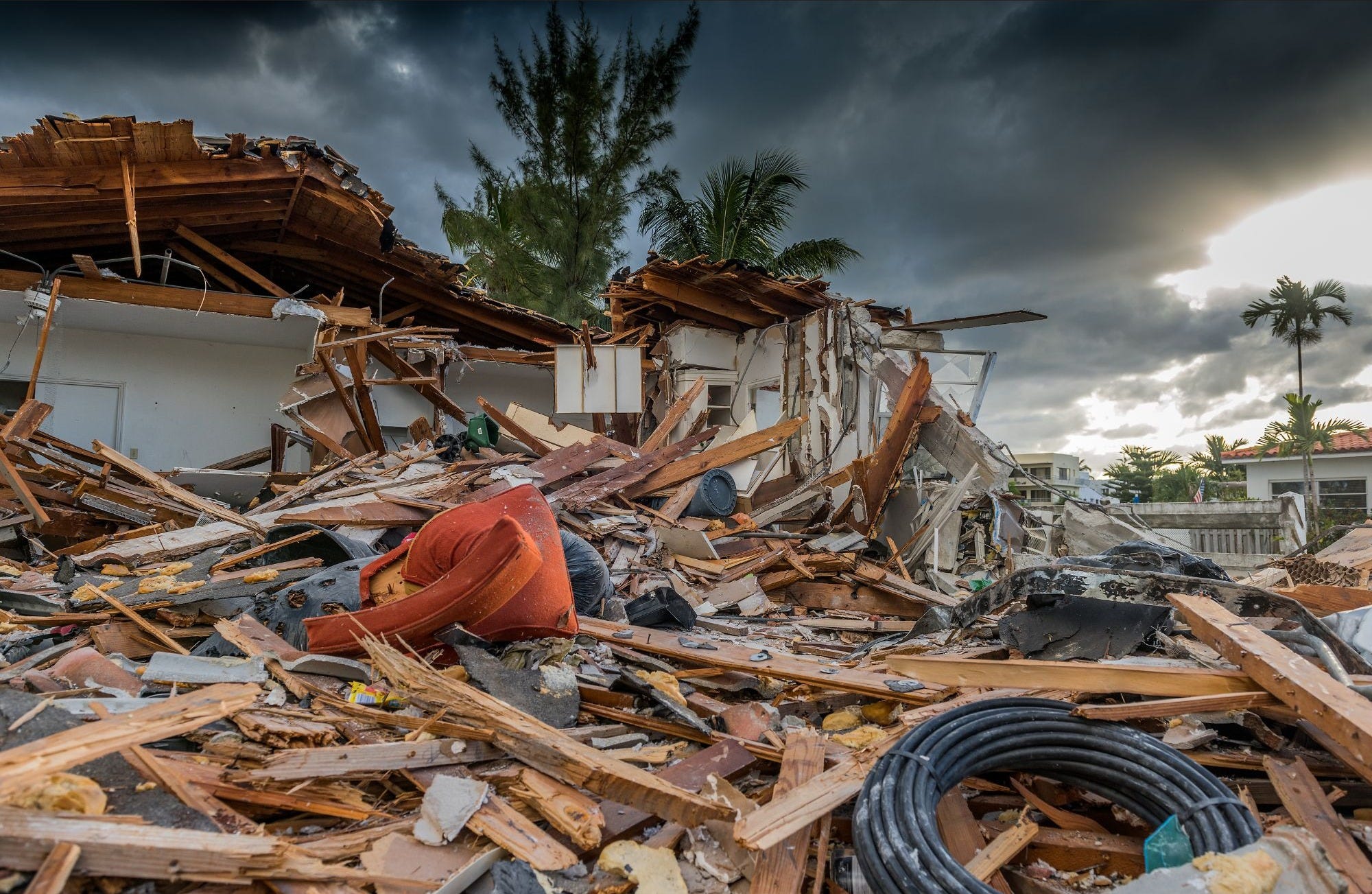
Hurricane season opened on June 1, and the Gulf is already warming up. That makes right now the time to talk about the thing most disaster prep gets wrong.
I spent 25 years in the Army — Sergeant First Class, three combat tours in Iraq. Planning for the worst case was the job. And the hardest lesson the Army drills into you is this: the disaster itself usually isn’t what gets people. It’s the days that come after — when the power’s still down, the stores are empty, and the help you assumed was coming hasn’t shown up yet.
We got a taste of that in Central Texas in February 2021. Most of us lived it. The lights went out, and for a lot of families they stayed out far longer than anyone planned for. That wasn’t the storm doing the damage. That was the week after.
Most folks who prep are ready for the first 72 hours. Far fewer are ready for the second week. That gap is where families get hurt. So, let’s close it.
Start with the disaster that’s actually coming for you
Forget the prepper fantasy of one universal catastrophe. The smart move is boring: figure out what your address is actually exposed to, then prepare for that.
Here in Central Texas, that’s a short list. Gulf hurricanes that push inland and dump water for days. Spring tornadoes. And those hard freezes that knock out a power grid nobody winterized. If you’re flood-prone, know your flood plain and your evacuation route cold. If you’re in tornado country, know where you go when the sirens hit — and have it be a real plan, not “the hallway, probably.”
You can’t prep for everything. You *can* prep for the two or three things most likely to land on your house. Do that first.
The 72-hour kit is the floor, not the ceiling
Every family needs a kit that keeps each person alive for at least three days with zero outside help:
Water— one gallon per person, per day. Non-negotiable.
Non-perishable food — stuff you’ll actually eat, no cooking required.
First-aid kit — a real one, not a box of band-aids from the checkout aisle.
Light and power — flashlights, a headlamp, extra batteries.
A multi-tool and basic hand tools.
Hygiene items— easy to forget, miserable to be without.
Cash — small bills. When the grid’s down, the card reader is a paperweight and the ATM is dead.
Documents — IDs, insurance, medical info, sealed in a waterproof container.
That’s the floor. The 2021 freeze went well past 72 hours for a lot of people. So, beyond the kit, build toward 3 weeks of water and food, learn a real water purification method, and if you can, set up a renewable source like rainwater collection. The goal isn’t to survive the event. It’s to still be standing the week after it.
Have a plan your family can run without you
Write down the actual plan, laminate several copies of it: where you go, how you get there, who you call. Pick an out-of-state contact everyone checks in with, because local lines and towers go down first.
Then assume your phone is a brick. Cell service and internet are the first things to fail and the last to come back. Have a backup — CB or ham radio, even a cheap set of two-ways — so your people can still reach each other.
And here’s the part everybody skips: Practice it. A plan you’ve never run is a wish. Walk your kids through it. Make them bored with it. When the real thing hits, you want trained behavior, not a family figuring it out for the first time in the dark.
Stay informed when the apps go dark
Get a NOAA Weather Radio — battery or hand-crank. When your phone dies and the WIFI’s gone, that radio is how you know whether the worst is coming or already passing. Knowing the timeline of what’s hitting you changes every decision you make. That’s true downrange and it’s true on your own street.
Your neighbors are your first responders
When a real disaster hits, the cavalry is hours or days out. The people who’ll actually be there in the first 48 are the ones on your block.
Know them before you need them. Trade phone numbers. Find out who has a chainsaw, who’s a nurse, who’s got a generator. A street full of strangers fends for itself badly. A street full of neighbors who’ve planned together is a force. I learned the value of that the hard way overseas, and it’s just as true at home.
Bottom line
Disaster prep isn’t about fear, and it isn’t about a bunker full of gear you’ll never touch. It’s about being the family that’s still functioning while everyone else is waiting on a truck that hasn’t come.
The grid will fail again. We all know this by now — we lived it. The only question is whether your family’s ready when it does.
If you want the rest of this series — the kits, the plans, the skills that keep a family standing — subscribe below. It’s free. One piece every couple of weeks: no fearmongering, no fluff, just the work that matters. Bring your family along while there’s still time to prepare calm, instead of in the dark.
Do the work before you need it.
— Jim Mahan
SFC, U.S. Army (Ret.) — 25 years, three combat tours in Iraq. Writes about prepping, self-defense, and family protection at The Protector Project.
---
P.S. — If this got you thinking, the next step’s already written down. My prepping book takes everything here and turns it into a do-this-now plan — it lives over at the hub, alongside the courses and the community. Get it here!
