
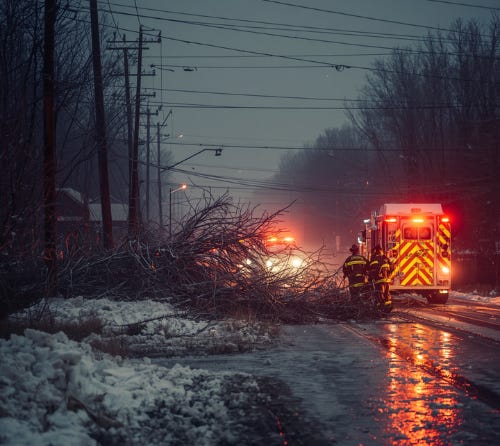
In February 2021, half of Texas lost water.
I was at home in Copperas Cove when Winter Storm Uri rolled through. Power went down. Pipes burst. Treatment plants went offline. Boil-water notices stretched into a second week. Anyone who had already done the work to store water didn’t have to stand in line at a Walmart that didn’t have any.
Texas summers teach the same lesson a different way. When it’s 105 for three weeks running and a transformer blows somewhere along the municipal line, the math gets simple fast: how much clean water do you have in your house right now that you didn’t have to drive somewhere to get?
I spent 25 years in the Army — three tours in Iraq — and dehydration in heat is not an abstract problem to me. A Texas July is closer to that environment than most people realize. Water storage isn’t a survival fantasy. It’s the difference between an inconvenient week and a dangerous one.
Here’s what I’ve learned about doing it right.
Start with the short-term supply
For short-term storage, your job is to have water on hand that you can reach immediately — enough to cover days or weeks, not months.
The minimum number to plan around: one gallon per person per day for drinking, cooking, and basic hygiene. A family of four needs roughly 120 gallons to cover a 30-day stretch. That sounds like a lot until you remember what 30 days without water actually looks like.
Commercially bottled water is ideal for short-term storage because it’s already treated and sealed. If you’re filling containers yourself, use food-grade, BPA-free plastic or glass, and treat the water with purification tablets or unscented household bleach to kill pathogens.
Store containers in a cool, dark place — heat and light accelerate algae growth — and check the supply every six months. Rotate or replace what’s gone bad.
Build the long-term reserve
Long-term storage takes more planning, more space, and more discipline. The goal here is a reserve that lasts months or years, not days.
Large, durable containers — 55-gallon barrels or IBC totes — work well for this. Place them on solid, level ground in a stable, cool location. Garages that hit 115° in August are not the right answer.
Treat the water before storage so it stays safe over time. Rotate the supply annually or use water preservers that can extend shelf life up to five years. The longer the shelf life, the less you have to think about it — but you still have to think about it.
Diversify
Stored water is your baseline. It is not the whole picture.
Rainwater collection systems and identified natural water sources near your home are force multipliers. They turn a finite supply into one that can be replenished. The catch: you need a real plan to filter and purify whatever you pull from those sources before you drink it. Untreated rainwater off a Texas roof is not drinking water.
Label everything
Mark every container with the storage date and whether the water has been treated. Use the oldest water first. Without labels, you’ll guess — and the day you need the supply is not the day to be guessing.
Conservation is half the battle
Storage gets you started. Conservation makes the supply last.
In an emergency, ration deliberately. Reuse greywater for non-potable purposes when you safely can. Collect rainwater to extend stored supplies. Every gallon you save is one you don’t have to find later.
Where to start
You don’t need 55-gallon barrels stacked floor to ceiling tomorrow. You need a plan, a starting point, and the discipline to check it twice a year.
If you’re starting from zero: pick up a case of bottled water this week, mark the date on it, and put it where you can find it in the dark. That’s day one. Build from there.
The 2021 storm was five years ago. The summers haven’t gotten easier. The grid hasn’t gotten more reliable. The work doesn’t take long. Do it before you need it.
Stay ready,

Jim