
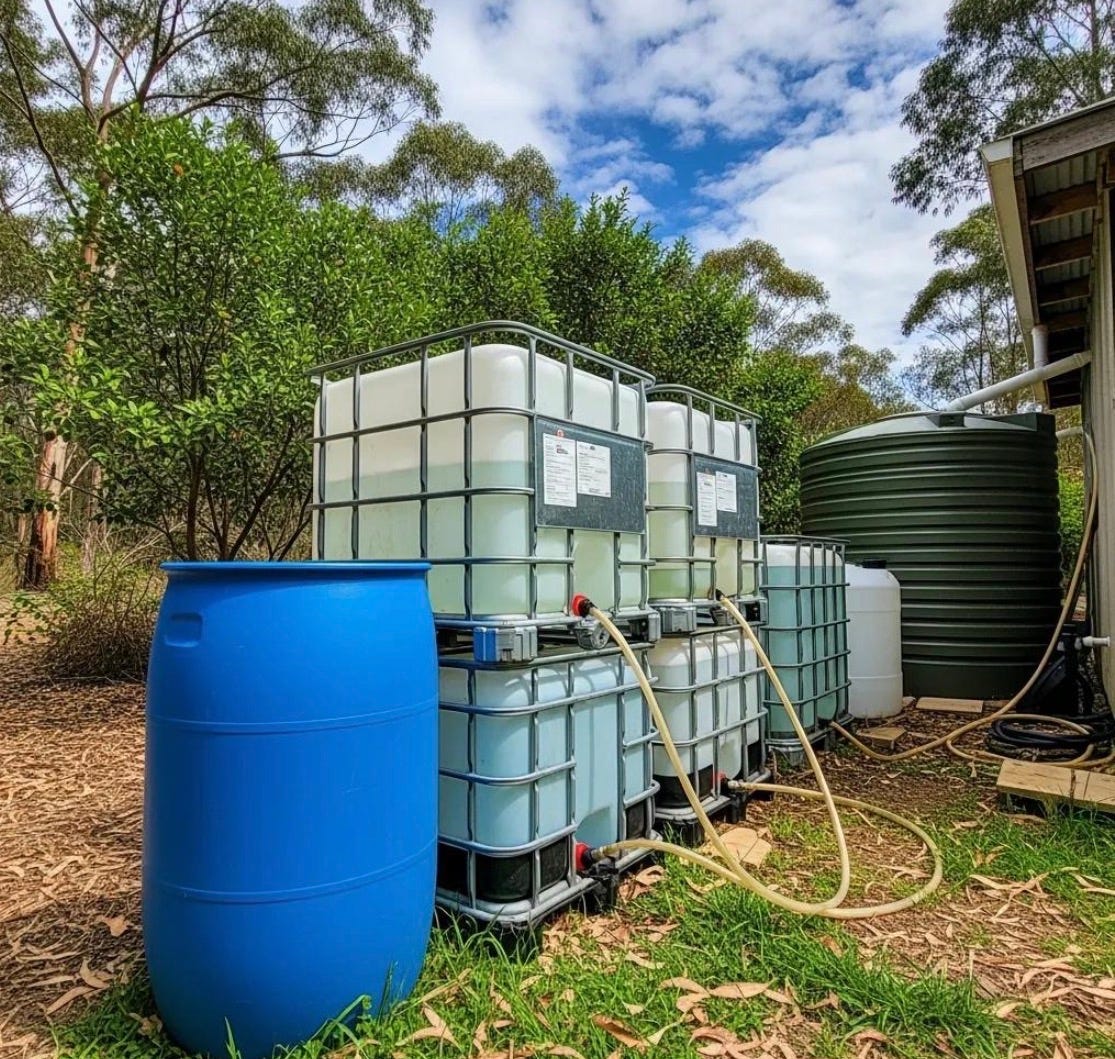
In February 2021, half of Texas lost water. The grid went down, pipes burst, treatment plants went offline, and boil-water notices stretched into a second week. It wasn’t theoretical anymore. Families were standing in lines at distribution centers because they hadn’t done the work before they needed it.
Water storage isn’t complicated. It’s two separate plans working together: short-term access and long-term insurance.
Short-term means days to weeks. One gallon per person per day. A family of four needs 120 gallons for a month. Bottled water is easiest — it’s already treated and sealed. If you’re filling containers yourself, use food-grade, BPA-free plastic or glass. Treat it with unscented bleach (8 drops per gallon) or purification tablets. Store it cool and dark. Check it every six months.
Long-term means months or years. 55-gallon barrels or IBC totes. Solid, level surface. Cool temperature. Same treatment as short-term — bleach or preservers that extend shelf life to five years. Rotate annually if you’re not using preservers.
But storage alone isn’t the answer. Diversify your sources. Rainwater collection systems. Natural water sources within walking distance. Filtration plan for anything you don’t trust. Backup sources: pool, hot water heater tank (top, not bowl), toilet tank top.
Label everything. Date stored. Treated or untreated. Source. Use oldest first.
The math is simple: one gallon per person per day, rotating stock, multiple sources. Before you need it, have it. That’s the work.