
It came from a 1992 LAPD study by Greg Meyer on police force options. But an arrest isn’t a street fight. An officer has backup, legal authority, and a single objective: immobilize for cuffs. A civilian defending their family has none of that.
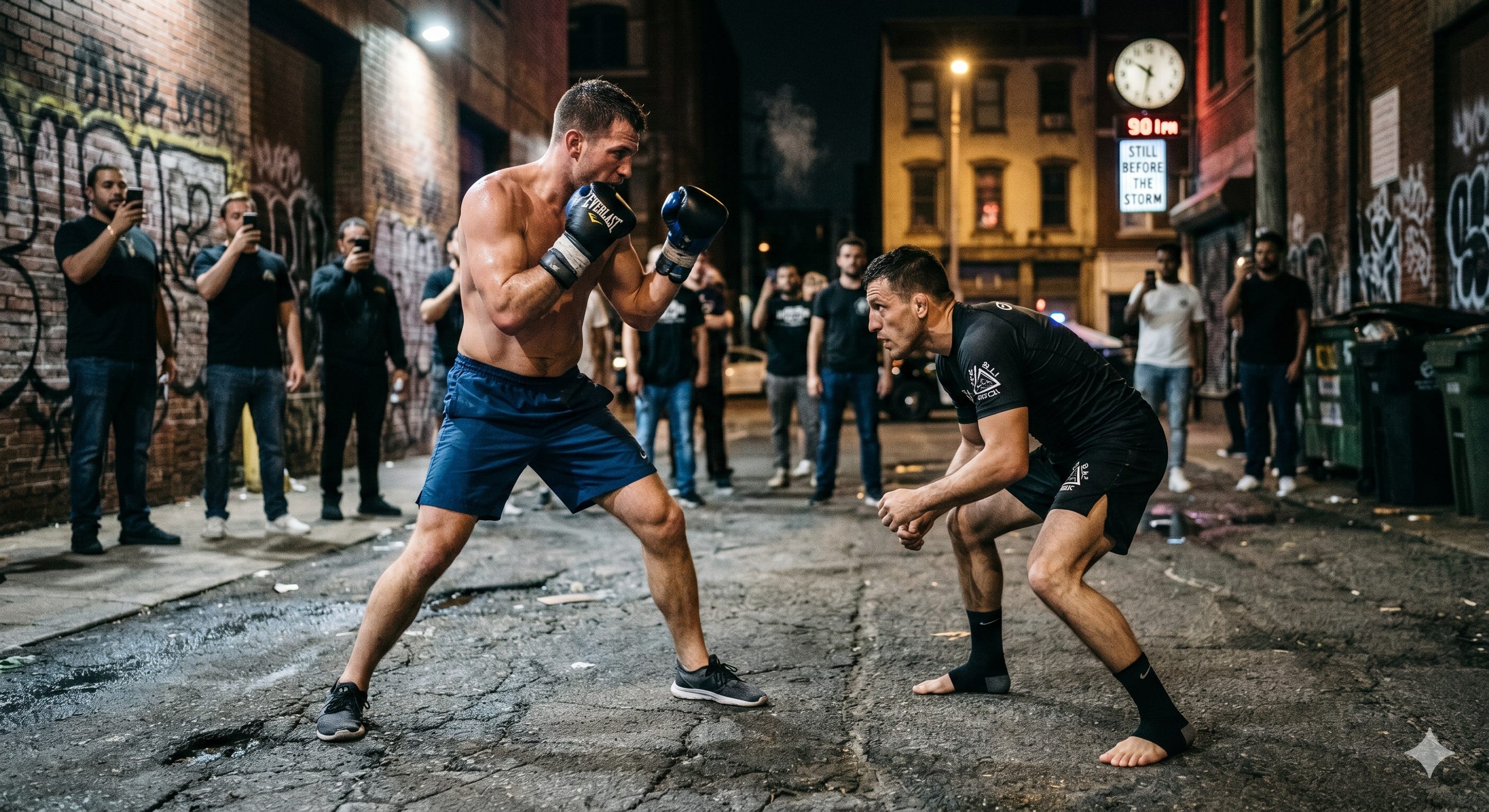
When you analyze actual street fight video data—the real, unchoreographed footage, not tournament tape—the numbers flip completely. Only about 30% to 40% of male-on-male fights end up on the concrete. The rest? Knockouts, someone running, bystander intervention. Staying standing.
I’ve spent decades training and teaching both striking and grappling. I’ve earned a 6th degree black belt in Kajukenbo, and a 3rd Degree Black Belt in Brazilian Jiu-Jitu (They’re both GREAT!) I’ve seen what happens when someone only knows one.
If you only grapple, you eat concrete and soccer kicks from a third party. If you only strike, one accidental clinch and you’re helpless.
The street has no referee, no weight classes, no mat. It has hard surfaces, multiple threats, weapons, and no rules.
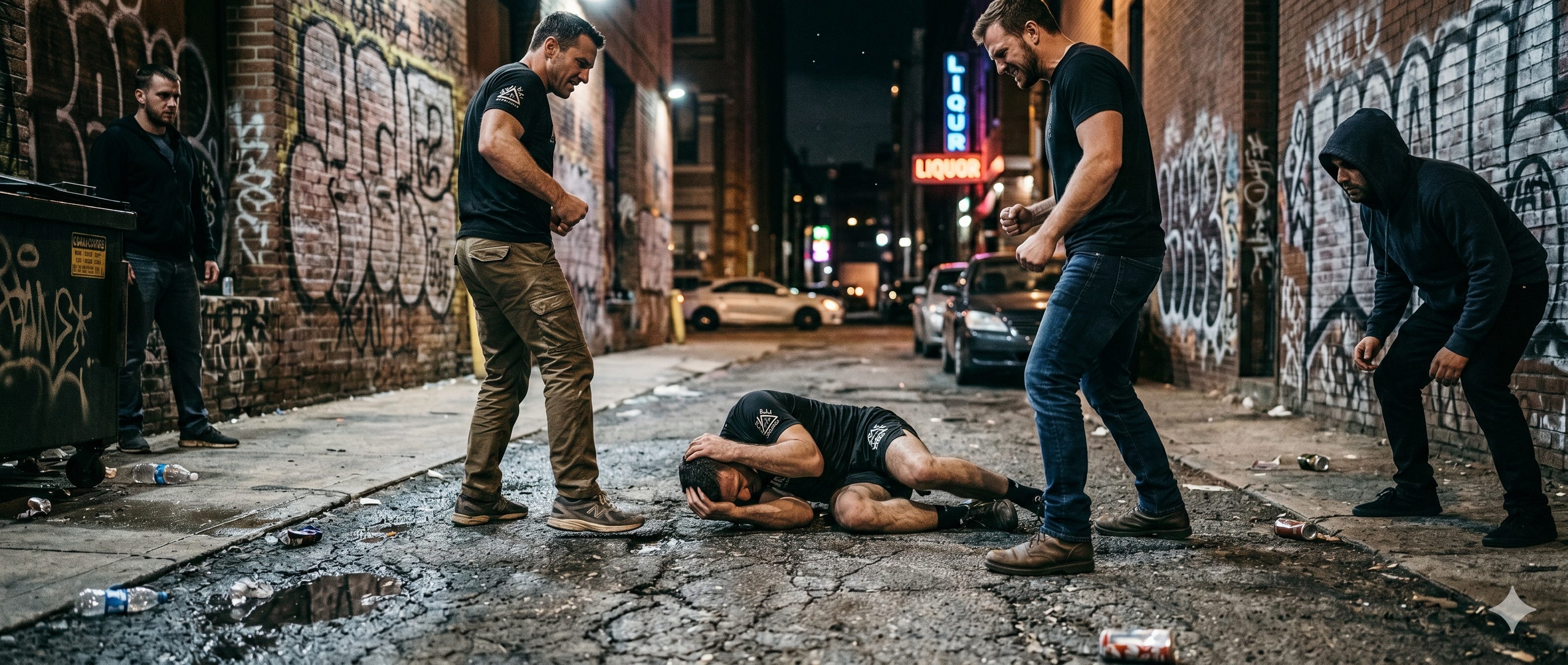
To protect your family, you can’t afford to be a specialist. You need striking, clinching, grappling—and you need to train with weapons across all those ranges too. A stick, a knife, improvised tools. The same ranges. The same transitions. Empty hand means nothing if you panic the moment a weapon shows up.
Don’t let a marketing narrative dictate your actual safety. Train the whole fight.
References: Meyer, G. A. / Honings, B. W. K. (1992). LAPD Use of Force Continuum. Menzel, K. (2022). Settler-on-Settler Violence: YouTube street fight analysis. Weenink, D., et al. (2021). Third-party intervention in public violence. Nassauer, A., & Legewie, N. M. (2019). Video-based conflict analysis methodology.